
Pregnancy is a deeply personal journey that involves continuous physical changes, emotional transitions, dietary adjustments, and frequent decision-making by pregnant woman and her near ones. Expecting mothers often navigate this journey with limited real-time guidance, relying on periodic clinical visits, fragmented digital tools, and informal advice. This creates a gap between medical care and day-to-day well-being.
Agentic AI offers an opportunity to bridge this gap by acting as an intelligent, proactive companion who understands the context, anticipates needs, and supports both the mother and the care provider. This blog presents a case study on developing an Agentic AI–based user-friendly solution for pregnancy and mother care, highlighting how generative AI can be designed responsibly to deliver continuous, personalized support.
Integrating an End-to-End Agentic AI Solution
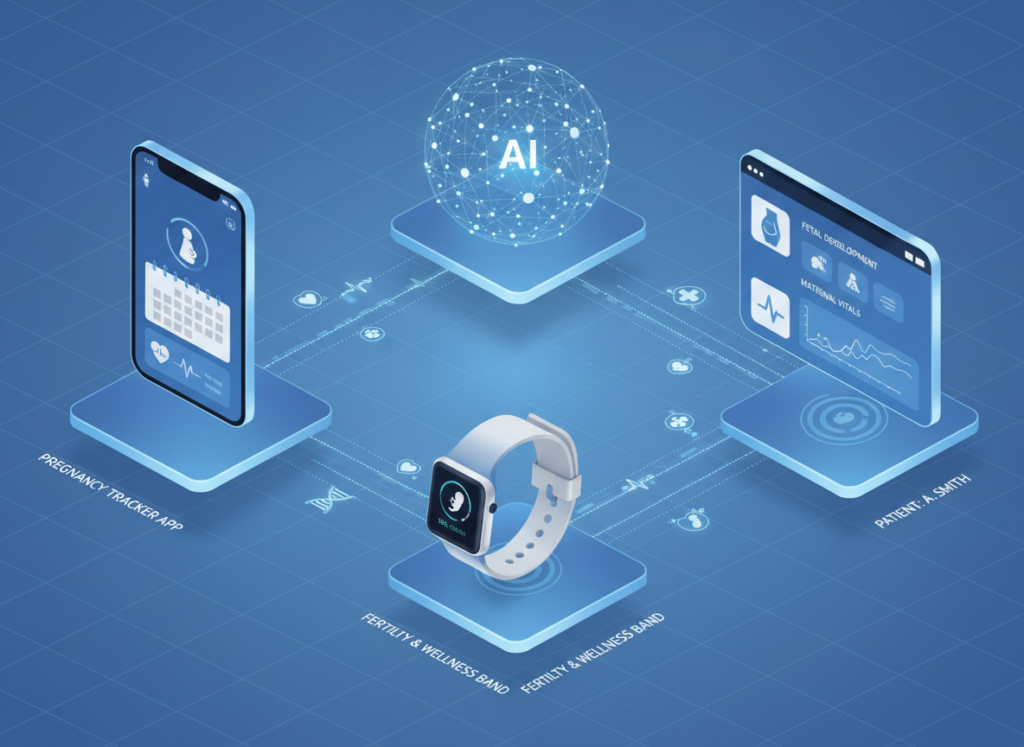
An Agentic AI system differs from a traditional chatbot by being goal-driven, science and context-aware. In pregnancy care, the objective is not just to answer questions, but to actively support the user throughout the journey. This begins with integrating an end-to-end Gen AI solution into the care workflow.
The solution evaluates daily health inputs, lifestyle data, emotional cues, and alternate and medical guidance to orchestrate appropriate actions. For example, when a pregnant user logs her daily vitals and sleep pattern through a mobile smart app, the agentic AI assistant analyzes trends over time, checks them against trimester-specific norms, and proactively provides guidance or alerts.
A typical scenario could involve a mother in her second trimester experiencing frequent fatigue. The Agentic AI correlates reduced sleep quality, iron intake data, and activity levels. Instead of generic advice, it suggests dietary improvements, hydration reminders, and recommends discussing iron levels during the next medical visit without causing unnecessary anxiety.
By integrating seamlessly into mobile smart applications, wearable data streams, and care provider dashboards, the AI becomes part of the natural workflow rather than an external tool.
Integrating LLMs into Ongoing Pregnancy Care Services
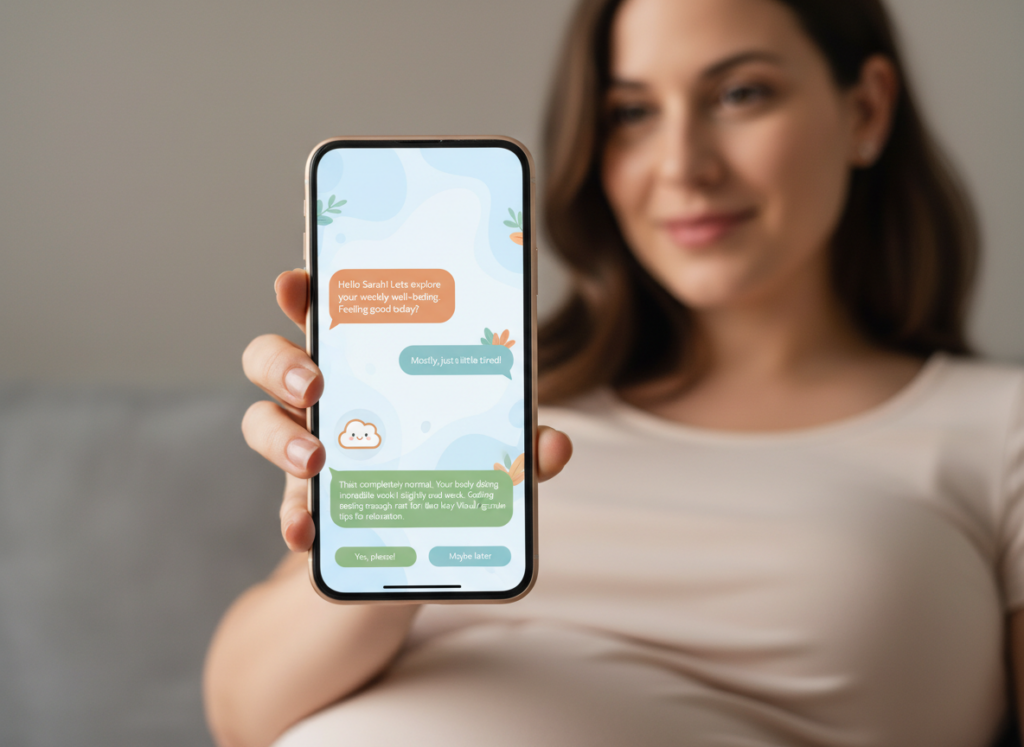
Large Language Models play a central role in translating complex health data into understandable, empathetic guidance. Their integration enables personal, conversational, contextual, and adaptive support across multiple aspects of maternal care.
In health monitoring, LLMs interpret physiological trends rather than raw numbers. For instance, if a mother notices a gradual rise in blood pressure readings over a week, the AI assistant explains what this could mean in simple language, suggests rest and hydration, and recommends when to seek medical advice, without providing a diagnosis.
For fetal awareness, AI helps mothers understand patterns rather than react to isolated events. If fetal movement feels reduced on a busy day, the AI asks contextual questions, explains normal variations, and helps the user decide whether observation or escalation is needed.
Diet and nutrition support becomes highly personalized through LLM reasoning. Consider a working mother who skips meals due to a busy schedule. The AI understands her routine, cultural food preferences, and trimester requirements, then suggests quick, nutritious meal options along with appropriate eating frequency, making healthy choices achievable rather than overwhelming.
Emotional well-being is another critical area. Mood swings and anxiety are common during pregnancy, yet often under-addressed. An Agentic AI can detect emotional cues in conversations, respond with empathy, suggest relaxation techniques, or encourage rest. In a scenario where the user expresses persistent anxiety or sadness, the system gently recommends reaching out to a care provider or trusted contact, maintaining safety and sensitivity.
Translating Requirements into a Practical Gen AI Solution Design
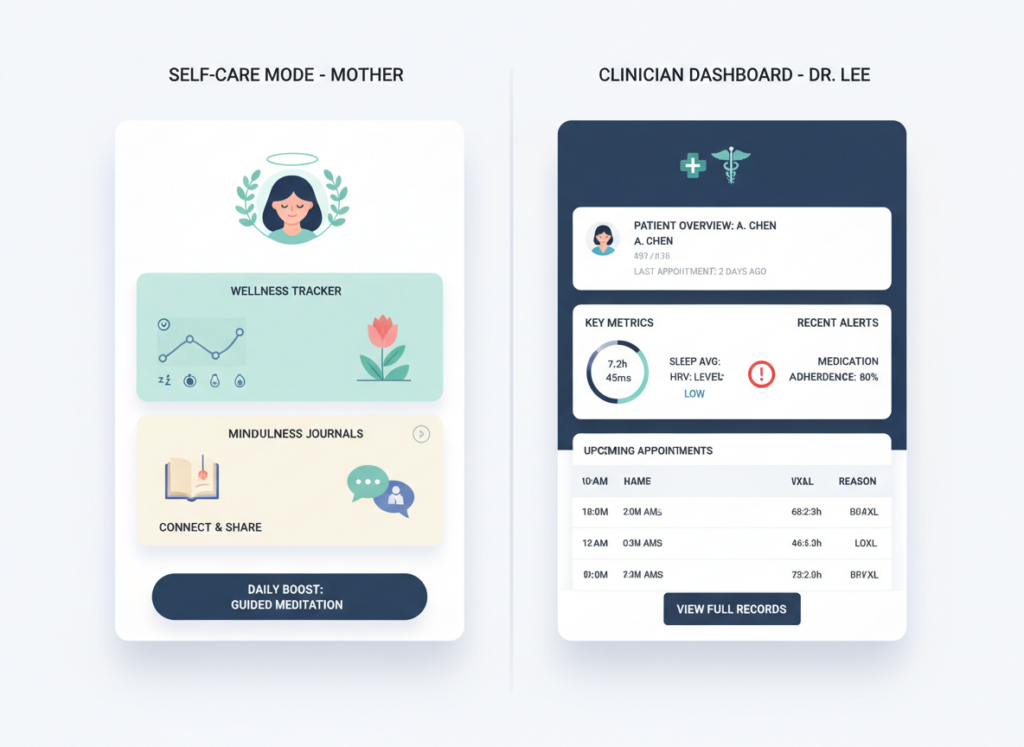
Designing an effective Agentic AI solution starts with deeply understanding of the user needs and translating them into a practical, safe, and intuitive system. Expecting mothers want reassurance, clarity, and simplicity. Care providers want concise insights, not information overload.
The solution is therefore designed with two complementary interaction modes. In the self-care mode, the mother interacts with the AI as a trusted companion. She can ask questions, receive daily insights, log symptoms, and get gentle reminders tailored to her stage of pregnancy. The interaction feels conversational rather than clinical.
In the care provider mode, clinicians and caregivers access summarized insights rather than raw data. For example, instead of reviewing weeks of logs, a doctor sees trend summaries, flagged concerns, and AI-generated context ahead of consultations. This saves time while improving the quality-of-care discussions.
By translating abstract requirements into clear AI-driven workflows, the solution ensures that technology reduces cognitive load instead of adding complexity.
Training Data Requirements and Preparation
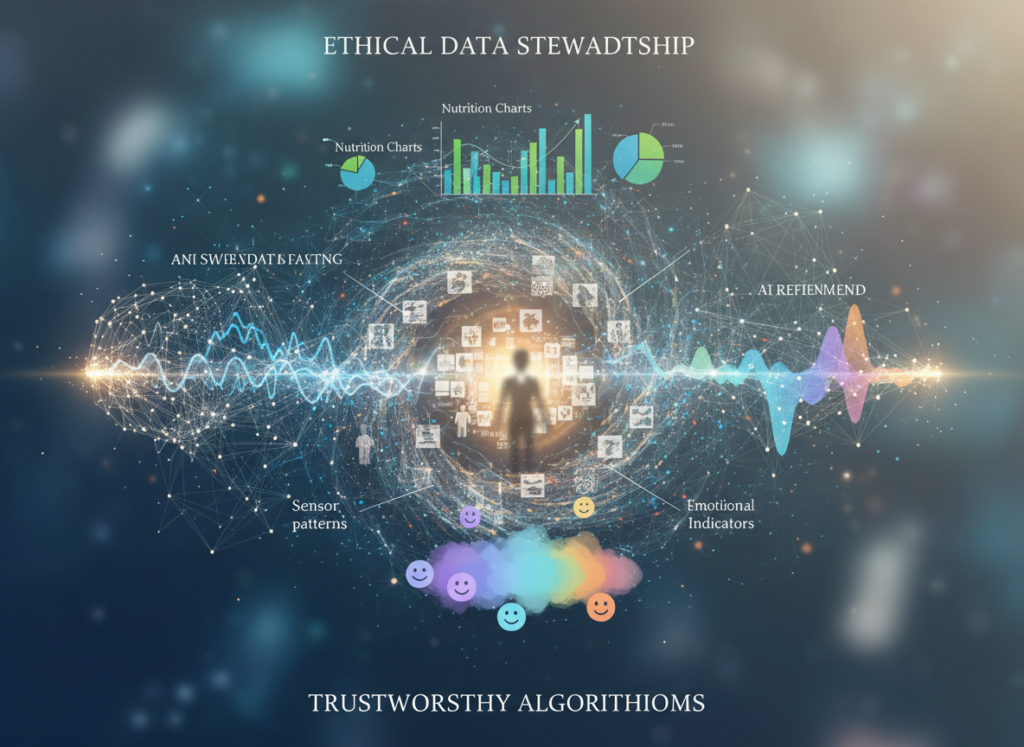
The reliability of an Agentic AI system in pregnancy care depends heavily on the quality and integrity of its training data. The data must reflect real-world diversity while adhering to ethical and privacy standards.
Training datasets include anonymized clinical references, nutritional guidelines, conversational interactions, sensor data patterns, and emotional health indicators. Preparing this data involves cleaning inconsistencies, removing bias, and aligning it with medical best practices.
For example, diet-related data is curated to reflect regional food habits and cultural preferences so that recommendations feel relevant. Emotional interaction datasets are carefully annotated to ensure the AI responds with empathy rather than judgment.
This rigorous data preparation ensures the AI remains supportive, accurate, and trustworthy across diverse user populations.
Leveraging Current Technology and Industry Standards

To be effective and scalable, the Agentic AI solution aligns with modern healthcare and AI standards. Health data interoperability is ensured through established frameworks, enabling integration with existing digital health ecosystems. Privacy, consent, and explainability are built into the design from the start.
Advances in AI safety, explainable models, and multi-agent orchestration can be leveraged to ensure that recommendations are transparent and auditable. This builds trust among users and care providers alike.
As technology evolves, the solution is designed to adapt by incorporating new wearable devices, updated clinical guidelines, and improved AI models without disrupting the user experience.
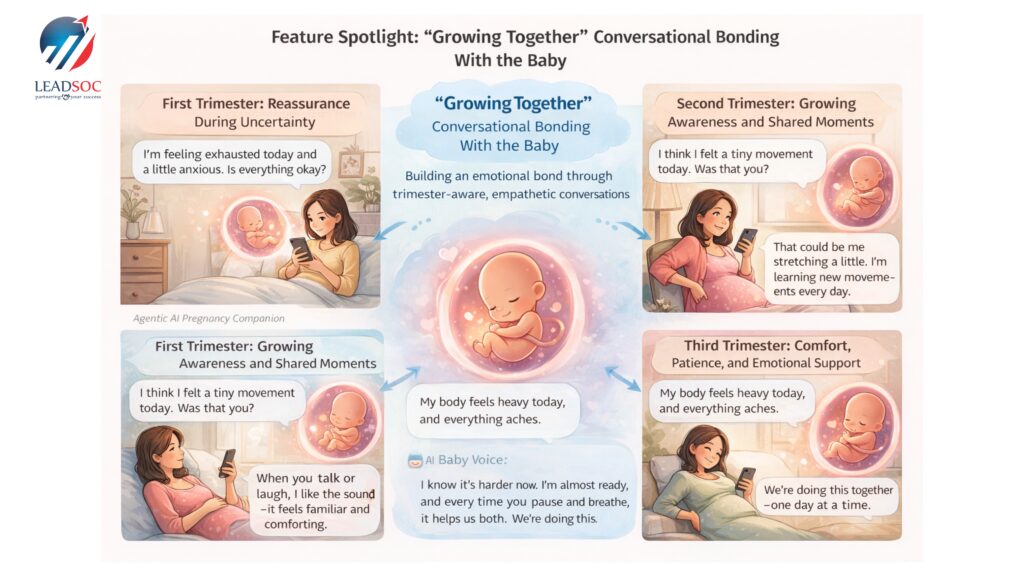
Feature Spotlight: “Growing Together”

One of the most unique aspects of the Agentic AI pregnancy companion is a thoughtfully designed emotional bonding feature that allows an expecting mother to interact with her baby throughout the pregnancy. This feature transforms the AI from a purely informational assistant into a gentle, supportive presence that nurtures excitement, reassurance, and emotional connection.
The experience is grounded in developmental science and delivered through imaginative, trimester-aware conversations. The AI does not simulate medical outcomes or replace clinical advice. Instead, it translates real developmental milestones into comforting, relatable expressions, helping mothers feel connected, especially during moments of fatigue, discomfort, or emotional vulnerability.
This feature is particularly valuable during periods when physical symptoms dominate the experience, offering a calming diversion that reinforces maternal instincts and emotional well-being.
First Trimester: Reassurance During Uncertainty

The first trimester often brings uncertainty, nausea, fatigue, and emotional swings. Physical signs are subtle, and many mothers struggle to feel connected during this early phase. The AI focuses on reassurance, calm, and the idea of gentle beginnings.
Sample Interaction
Mother: “I’m feeling exhausted today and a little anxious. Is everything okay?”
AI (Baby Voice): “I’m very small right now, but I’m settling in comfortably. When you rest, I feel safe. You don’t have to do everything today, Mom, just taking care of yourself is enough for me.”
This interaction reframes rest and self-care as meaningful acts, reducing guilt and anxiety while fostering early emotional attachment.
Second Trimester: Growing Awareness and Shared Moments

As energy returns and fetal development becomes more noticeable, the second trimester is often a time of excitement and curiosity. The AI interaction evolves to acknowledge growth, movement, and shared experiences.
Sample Interaction
Mother: “I think I felt a tiny movement today. Was that you?”
AI (Baby Voice): “That could be me stretching a little. I’m learning new movements every day. When you talk or laugh, I like the sound, it feels familiar and comforting.”
This stage encourages positive bonding behaviors such as talking, reading, or playing soft music, reinforcing joyful engagement without over-sensationalizing the experience.
Third Trimester: Comfort, Patience, and Emotional Support

The final trimester can be physically demanding, with back pain, sleep disturbances, and anticipation of birth. AI adopts a calming, appreciative tone, reinforcing patience and mutual care.
Sample Interaction
Mother: “My body feels heavy today, and everything aches.”
AI (Baby Voice): “I know it’s harder now. I’m almost ready, and every time you pause and breathe, it helps us both. We’re doing this together, one day at a time.”
This interaction provides emotional grounding during discomfort, helping the mother feel seen, supported, and emotionally connected during the most demanding phase.
Designed for Joy, Safety, and Emotional Well-Being
The “Growing Together” feature is intentionally designed as a supportive emotional layer, not a clinical tool. The language is warm but cautious, imaginative but responsible. It avoids predictions, diagnoses, or dependency, ensuring that emotional engagement remains healthy and empowering.
From an Agentic AI perspective, this feature adapts tone, timing, and content based on pregnancy stage, user mood, and interaction history. During high fatigue or stress periods, it emphasizes reassurance and rest. During energetic phases, it encourages engagement and curiosity.
Why This Feature Matters
Agentic AI has the potential to redefine pregnancy and mother care by providing continuous, personalized, and compassionate support. By integrating generative AI into daily care workflows, translating real user needs into thoughtful system design, and grounding the solution in trusted data and standards, we can create an intelligent companion that truly supports mothers and caregivers.
For many mothers, pregnancy can be both beautiful and overwhelming. This feature adds a moment of lightness, comfort, and emotional continuity, especially valuable during uncomfortable days or emotionally challenging phases. It turns AI into a companion that not only informs, but cares in a human way.
For LeadSoC, this spotlight feature in the case study exemplifies how Agentic AI can be engineered with empathy at its core where intelligence enhances emotional connection, and technology supports one of life’s most meaningful journeys.